-
 admin
- November 21, 2026
 admin
The market for aromatic products in the United States has seen significant expansion, evolving from niche boutique sales to mainstream retail availability across all fifty states. As consumer demand for diverse and authentic fragrances grows, American retailers, distributors, and wellness brands are increasingly looking to secure a reliable and cost-effective supply chain. While domestic production exists, it often cannot match the scale, pricing, and centuries-old traditional craftsmanship found in the primary source market. Consequently, importing bulk incense sticks USA from overseas has become the most viable strategy for businesses aiming to maintain healthy profit margins while offering a wide variety of high-quality products. This procurement model, however, requires careful navigation of international trade dynamics, supplier vetting, and logistics to ensure a seamless flow of goods from the production hubs of Asia to American distribution centers.
For any US importer, the first critical step is identifying the right manufacturing partner, and India remains the undisputed global leader in agarbatti production. Indian manufacturers offer an unparalleled diversity in scent profiles, ranging from traditional temple fragrances like sandalwood and patchouli to modern, bespoke blends designed for the Western market. Establishing a direct relationship with an Indian incense manufacturer is highly advantageous as it cuts out intermediaries, ensuring better pricing transparency and greater control over product customization and quality assurance. These manufacturers are well-versed in producing high volumes for export, utilizing automated dipping and hand-rolling techniques to meet specific demands. When vetting potential partners, it is essential to look for those who demonstrate compliance with international labor standards and possess the necessary certifications for exporting to North America.
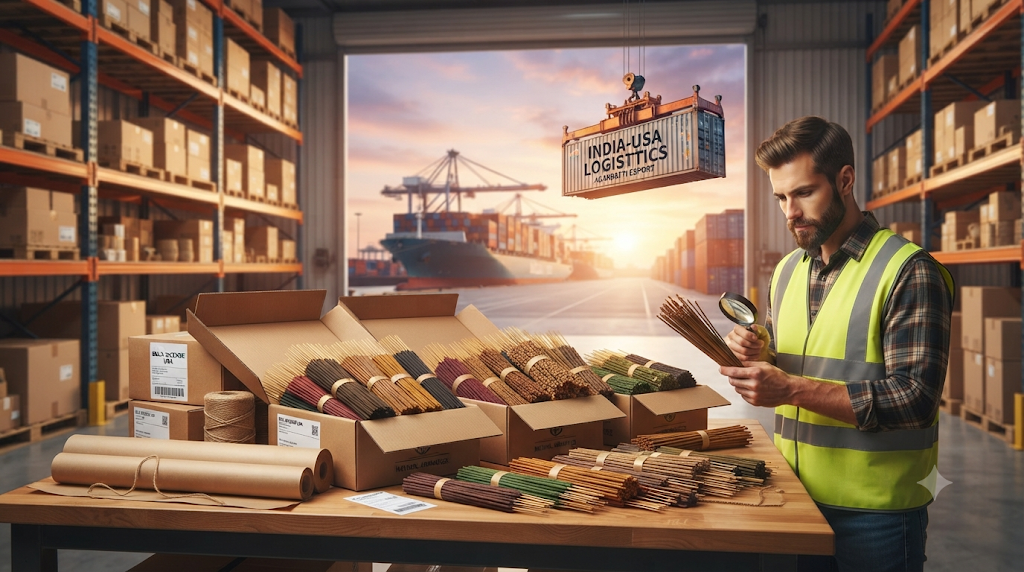
A common hurdle in this sourcing strategy is managing the complexities of international logistics and freight forwarding. Shipments typically originate from major Indian ports such as Nhava Sheva (Mumbai), Mundra, or Chennai, bound for major US entry points like Los Angeles, New York, or Savannah. Depending on the volume and budget, businesses can choose between sea freight, which is more economical for large bulk orders but has longer transit times, and air freight, which is faster but significantly more expensive. For most importers of wholesale agarbatti USA, a full container load (FCL) via ocean freight is the preferred method to optimize per-unit shipping costs. Partnering with a reliable customs broker is also non-negotiable, as they will handle the necessary paperwork, tariff classifications, and US Customs and Border Protection (CBP) clearance processes, ensuring the goods are not delayed upon arrival.
Navigating the regulatory landscape is another crucial component of successfully importing incense into the United States. While incense sticks are not classified as food or cosmetics, they must still adhere to specific safety and labeling regulations set forth by the Consumer Product Safety Commission (CPSC). Furthermore, any fragrances containing organic materials or essential oils may be subject to scrutiny by the U.S. Department of Agriculture (USDA) and the Environmental Protection Agency (EPA), particularly concerning the Lacey Act, which regulates the import of plant products. Ensuring that your Indian incense supplier provides accurate ingredient lists and Safety Data Sheets (SDS) is vital for demonstrating compliance. Proper labeling, including country of origin markings and safety warnings, must also be applied to both individual retail packaging and master shipping cartons to avoid non-compliance issues at US ports.
Beyond logistics and compliance, the long-term success of a bulk incense import business hinges on product quality and market differentiation. The US consumer is increasingly discerning, showing a preference for natural incense sticks made with essential oils, herbs, and resins, rather than synthetic alternatives. Working closely with your Indian manufacturer to develop premium product lines, such as masala incense or hand-rolled flora agarbatti, can set your brand apart in a crowded marketplace. Additionally, offering sustainable packaging options can significantly enhance brand appeal to environmentally conscious American buyers. By building a robust supply chain that prioritizes ethical sourcing, consistent quality, and regulatory adherence, US businesses can successfully leverage the manufacturing prowess of India to meet the growing demand for high-quality incense across the nation.